Fumbled but Recovered
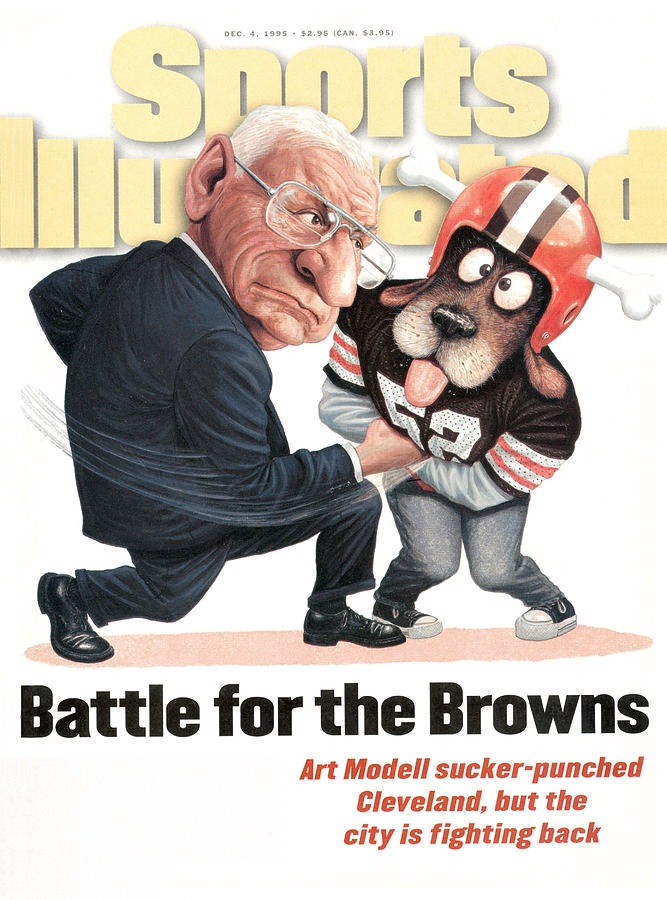
Our tale begins in 1995, when then Cleveland Browns’ owner, the ever vilified Art Modell, announces he is moving the beloved Browns to Baltimore. The city is incensed by Modell’s betrayal. Its mayor, Mike White, and Ohio’s governor, George Voinovich, share the city’s outrage and immediately initiate political and legal challenges to the move (as depicted in this famous Sports Illustrated cover). Unfortunately, their legal opposition cannot prevent the move.
However, in 1996, a legal settlement does grant Cleveland the rights to the Browns’ name, colors, and history along with the promise of a new NFL franchise. In 1998, the league awards the city this new franchise, and our story ends on a happy note.
Well, not exactly.
This ending is merely the beginning of our stadium tale – the kickoff of a narrative characterized by legal battles, public funding controversies, and an impassioned battle between a city and a sports franchise.
Challenging the Call
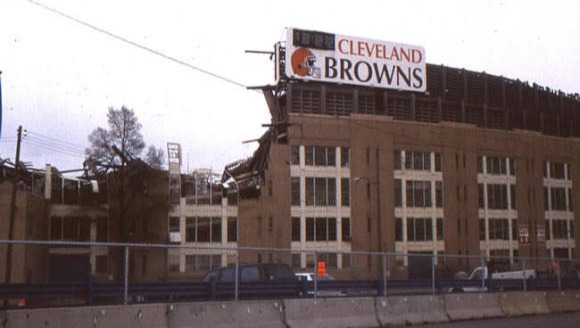
The promise of a new franchise cheered the city, but brought with it a variety of challenges and controversies. Time might have healed some wounds of Browns’ fans, but in this case, time was also a double-edged sword. In order to actually acquire the promised franchise, the city was required to demolish the old Cleveland Stadium (this was necessary since the City Planning Commission opted to build on the same footprint of the original structure) and
construct a state-of-the-art stadium with adequate parking and infrastructure – all by 1999. This “strict, tight timeline,” as described by the late Cleveland sportscaster Jim Donovan, ultimately contributed to a serviceable, but less than stellar venue.
Other issues complicated the process even before groundbreaking. Urban planners and politicians argued that the location of the new stadium – like that of the old one – would squander valuable lakefront property that the city could put to better use. They also complained that the lakefront location, exposed as it is to harsh winter weather, would result in miserable conditions for the fans. Nevertheless, finances dictated that there was no other option – the new stadium was destined for the shores of Lake Erie.
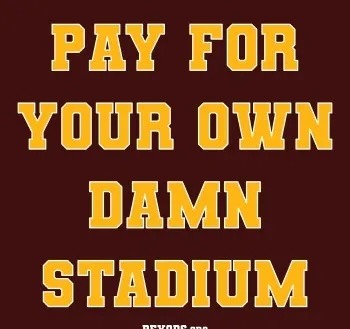
Another more substantial criticism concerned the cost of the new stadium and its financing. Who would pay the bill? The public has often borne the brunt of financing new sports’ venues, and in this case, the citizens of Cuyahoga County were no exception. A controversial extension of a 1990 sin tax (on alcohol and tobacco) was promoted by White and Voinovich, initially as an attempt to keep the Browns in Cleveland, but ultimately to acquire the new franchise and finance the required stadium. Desperate to hold on
to the Browns in either form, residents passed the measure by over 70%. Their share of the costs came to around $175 million while the new owner, Al Lerner, contributed $54 million and the NFL added $48 million. The tax was not without its critics, though. Opponents argued that the tax was regressive, adversely affecting lower income citizens. They also resented that it essentially subsidized billionaires at the expense of the working class. Despite these complaints, groundbreaking commenced in May of 1997.
Rushing to Completion and Penalty Flags
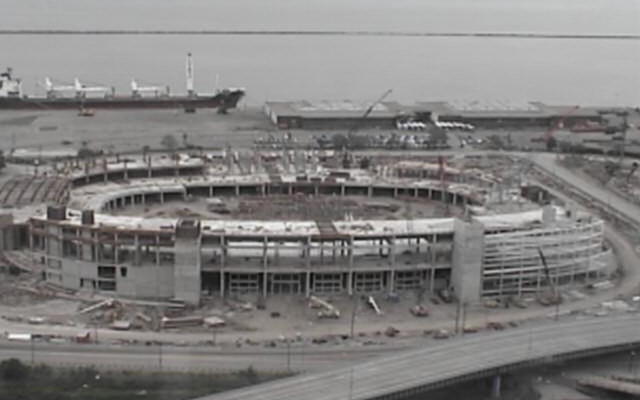
Though a multipurpose domed stadium had long been a dream of Browns’ fans, the present circumstances demanded economy and speed. Dome aspirations were scrapped, and the building was designed as a football-only, open-air stadium with construction beginning in 1997. However, because of the July 1999 deadline, the issue of time still remained a challenge – a challenge the city was able to meet (to a certain extent) but not without consequences. Regrettably, the
deadline led to construction being rushed, and work during the harsh winter season exacerbated the problems. According to Sean Walsh, a construction worker on the project, contractors “cut a lot of corners, too fast,” and as a result, “details slipped through the cracks.” This led to some serious structural issues later on. In 2018, a Capital Repair Audit revealed that the stadium’s water system was “improperly installed” during construction, the structural concrete was deteriorating, and the quality of seating in the lower bowl was only “fair to poor.” These were only three of a number of flaws that affected the structural integrity of the stadium. Walsh states, “It was put together fast-track and it’s falling apart.” In 2026, Cleveland.com concluded that the hurried nature of the project “resulted in a mediocre facility saddled by cost overruns of at least $61 million over the original estimate.” Nevertheless, the deadline had been met, and on August 21, 1999, the Browns inaugurated their new stadium.
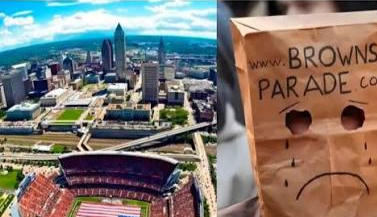
Was the stadium ready for its debut? “Let’s face it…it wasn’t,” reminisced Jim Donovan. As the teams prepared for the kickoff, “workers were still drilling and hammering trying to get to the finish line.” He added that there were no escalators for fans to reach the top of the stands, so eventually, Al Lerner had them installed and paid for them himself. Field conditions were subpar as well.
Very early in the season, clumps of grass and soil were torn up and scattered during play. After just two home games the field was unplayable, and half the field had to be replaced. It was an inauspicious start, mirroring the team’s early-season embarrassing loss to the Pittsburgh Steelers on national television. But at least the Browns were back in Cleveland.
Coach’s Decision
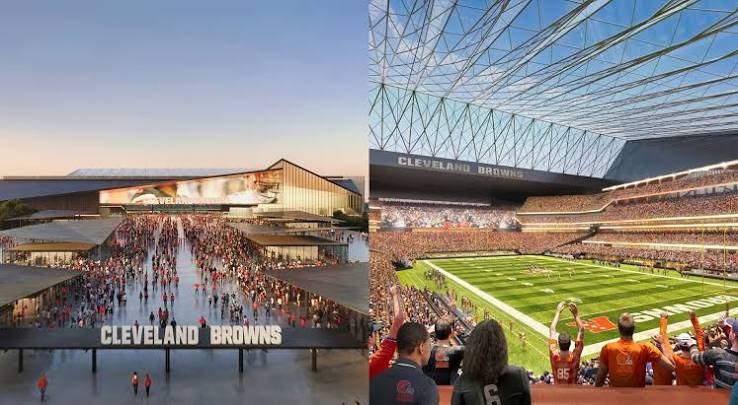
The average lifespan of a professional football stadium is 30-35 years. Despite its sub-par construction, Cleveland Browns Stadium, now known as Huntington Bank field, looks like it will reach only 30. That’s because the current Browns’ owner, Haslam Sports Group, had determined, and had successfully convinced the public, that the team required a new stadium. After much controversy – once again – groundbreaking for the new stadium took place on April 30, 2026.
According to Huntington Bank, which maintained naming rights, the structure would feature a “fan-centric” design. Probably the most significant aspect of this design was its long-desired dome. This transparent roof would not only protect the fans from inclement weather, but would also provide an abundance of natural light. Perched around the bowl of the stadium would be a series of state-of-the-art videoboards with maximum resolution. Comfortable seating would be set closer to the field than that in any other NFL stadium. The building itself will be surrounded by mixed-use development including hotels, apartments, retail stores, and restaurants. These were just a few of the improvements over the old stadium and its lakeside site. Surely no Clevelander would oppose this project.
Questionable Call
Hold on a minute. That assumption would be definitely false. First of all, the project ensures that the Browns will be leaving Cleveland once again (granted, to the suburb of Brookpark), but nevertheless, out of the city of Cleveland. For a city still struggling to reinvent itself, this is certainly a detrimental loss. In addition, once again both state and local governments – meaning, of course, citizens’ taxes – will be obligated to partially finance the new stadium development. Furthermore, they will be required to continue to contribute to the aforementioned sin tax which won’t expire until 2034. Also, the necessary costs of infrastructure upgrades will only add to the public’s debt.
Proponents claim they can answer these concerns. As for the issue of abandonment, the stadium site is only about 12 miles from downtown so it’s not as if the team is forsaking the city. The relocation will also lessen the hassle of driving and parking downtown. In addition, once the old stadium is razed, it will no longer block access to the lakefront. The site will then be available for new development – housing, parks, restaurants, etc.
As for financial worries, the Haslam Sports Group will be providing close to 70% of construction costs and has pledged to pay for any cost overruns. The mixed-use development on the site will be financed by private investors, and the development is projected to generate $1.2 billion in annual economic activity. Also to be considered is the promise that the new stadium construction will create new jobs, raise current salaries, and provide higher tax receipts for the governments of Brookpark and Ohio.
Overtime
Seems like a win-win situation – as long as we don’t take into account the 30 years of peer-reviewed academic research that concludes, “A new sports facility has an extremely small (perhaps even negative) effect on overall economic activity and employment. No recent facility appears to have earned anything approaching a reasonable return on investment.” This complicates things a bit, doesn’t it?
So our tale ends on an inconclusive note. A famous quote from the conclusion of Dickens’ A Tale of Two Cities begins with the words, “It is a far, far better thing…” On one hand, Haslam’s new stadium complex appears to embody this quote. On the other, its presumption is questionable. It looks like we’ll have to wait for a sequel – and only time will tell.
Sources
- https://www.news5cleveland.com/sports/browns/decisions-of-the-past-could-determine-future-plans-for-firstenergy-stadium-leas
- https://www.wkyc.com/article/sports/nfl/browns/jimmys-take-new-stadium-cleveland-browns-jim-donovan/95-30570472-9d22-4225-b87c-71cff1cea7e1
- https://dome.huntingtonbankfield.com/faqs
- https://case.edu/ech/articles/c/cleveland-browns-stadium
- https://www.ideastream.org/sports/2024-05-15/whats-the-future-of-browns-stadium-some-say-voters-should-weigh-in